

What is ERP Software
Definition ERP software
Definition of ERP
ERP stands for Enterprise Resource Planning. It is software designed to connect different areas of a company and optimize business processes. ERP systems help plan, control, and execute processes while monitoring them in real time.
Typical functions include financial management, production, warehousing, and customer relationship management. By using ERP software, companies can streamline workflows and improve efficiency.
The origins of ERP lie in material requirements planning software, which focused on ensuring timely completion of goods. Over time, additional functions were integrated, leading to today’s fully integrated ERP systems.
Which areas does ERP cover?
ERP software is modular and typically includes:
- Financial accounting
- Human resources
- Purchasing
- Marketing
- CRM
- Sales
- Warehousing
- Production
- Service management
All modules share a common, centralized database, ensuring seamless data flow across the organization.
ERP and cloud computing
Most ERP providers – including Microsoft – now offer their solutions as cloud-based software. This enables users to access the interface through any common browser. Small and medium-sized businesses, in particular, benefit from location- and platform-independent access as well as predictable costs.
Cloud computing (SaaS) combined with ERP software delivers flexibility, security, real-time updates, and cost transparency. Companies pay a fixed monthly fee based on the number of users. This ensures full cost control, and innovations or upgrades are included in the subscription at no extra charge.
What are the advantages of an ERP system?
Today, almost every company uses an ERP system. The reasons vary, but one thing is clear: the investment must deliver measurable value. ERP software offers numerous benefits, including:
Key advantages of an ERP system
- Efficient processes through streamlined workflows
- Centralized data access, ensuring all departments work with up-to-date information
- Greater flexibility and faster response to changes in the business environment
- Optimized inventory management
- Digitalized processes, improving resource planning and control
- Higher customer satisfaction thanks to quicker and more accurate order and inquiry handling
- Improved transparency across all business areas
- Reduced errors and enhanced data quality
Overall, ERP systems help companies increase efficiency, optimize processes, and strengthen competitiveness.
ERP and digitalisation
Digitalisation is transforming business processes and redefining the role of traditional ERP systems. In the past, ERP aimed to cover as many processes as possible within one solution. Today, it serves as a central hub for business operations.
This makes a modern foundation essential—one that extends beyond company boundaries. Tomorrow’s ERP must be flexible enough to support new business models shaped by digitalisation.
Modern ERP solutions also need to handle growing data volumes and incorporate emerging technologies such as artificial intelligence and machine learning.
Success factors when evaluating an ERP
Introducing a new ERP system is a complex process that requires careful planning and a clear strategy. Together with two experts from our project team, we address key considerations during the evaluation phase and answer essential questions:
- How long does an ERP project typically take?
- What does the roadmap look like?
- What risks should be anticipated?
- What costs can be expected?
Why should you use an ERP system?
The reasons for implementing ERP in a company vary, but one thing is clear: the investment must deliver measurable value. Ideally, ERP supports the automation of manual processes and helps businesses achieve key goals:
An ERP system enables companies to:
- Increase sales without adding more staff
- Boost sales efficiency
- Optimize inventory management
- Reduce production costs
Where are ERP systems used?
ERP systems are used by both small businesses and large corporations, with differences mainly driven by industry-specific requirements. The key factor is the goal the company wants to achieve with ERP.
An ERP system is typically implemented when a holistic solution is needed. Common objectives include:
- Driving digitalisation
- Automating business processes
- Optimising resources
- Increasing transparency across operations
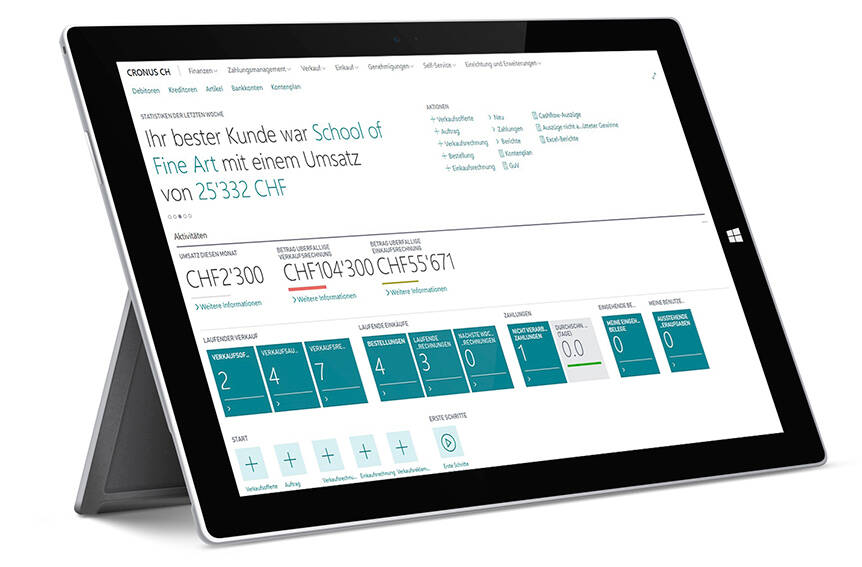
What ERP functions should an efficient ERP programme have?
When selecting an ERP system, consider the following key aspects to maximize its benefits:
User interface: An intuitive interface improves user experience and accelerates adoption, helping employees quickly become familiar with the system.
Extensibility and flexibility: New requirements and changing customer needs demand an ERP that can adapt and grow with your business.
System openness: A modern ERP should support open standards and APIs (Application Programming Interfaces), enabling seamless integration with external applications.
Release plan: A clear roadmap ensures continuous development and adaptation to future requirements, keeping your ERP solution up to date.
The most important terms related to ERP software solutions
- CRM: Customer Relationship Management – a strategy for systematically managing all relationships and interactions with existing and potential customers.
- PPS: Production Planning and Control – a sub-area of production management linked to production engineering and business informatics.
- Business Intelligence (BI): The process of analyzing internal and external data using tools and applications, presenting insights to decision-makers.
- Supply chain: A network of organizations involved in creating value through products and services for end customers, covering activities from suppliers to customers.
- Cloud computing: A model that provides on-demand access to a shared pool of configurable computing resources (networks, servers, storage, applications, services) via the internet, with minimal management effort.
- PaaS: Platform as a Service – a cloud service that enables developers to build and run applications on provided infrastructure using interfaces.
- IaaS: Infrastructure as a Service – a model offering only the hardware required for applications, rather than complete hardware-software solutions.
- SaaS: Software as a Service – a model where software is provided as a service for a fee instead of being sold as a product.
- ERP: Enterprise Resource Planning – the task of planning and managing company resources, including capital, personnel, materials, IT systems, and communication technologies.
- IoT: Internet of Things – a concept where objects, animals, or people have unique identifiers and can transfer data over a network without human interaction.
- AI: Artificial Intelligence – a branch of computer science focused on automating intelligent behavior.
- SCM: Supply Chain Management – a management approach that records all flows of products, raw materials, and components in a process-oriented manner.
- Master data: Core business data that remains unchanged over a certain period.
- Transaction data: Data that changes continuously during business operations.
Patrick Glauser | Head of Sales, Member of the Executive Board
Then I will be very happy to advise you personally. Give me a call: 058 200 14 14 or book a consultation with me directly. I look forward to hearing from you!
Contact us